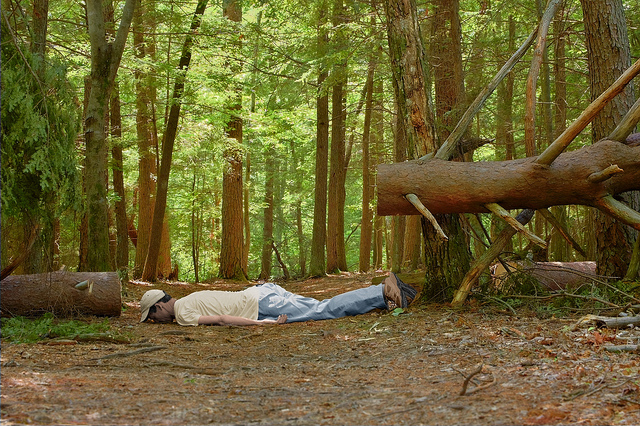
Don’t Lose Your Way

Photo credit: Mike_tn / Foter / CC BY-NC-NDReality check: Some leaders will lose their way. As a result, their leadership will either be badly damaged or completely destroyed. For some, much hard work will be required to restore their role as a leader; others may never be given another opportunity to lead.

So the question arises: Are there steps that you as a leader can take that will keep you from losing your way?

Providing Helpful, Negative Feedback

ConversationProviding negative feedback may be beneficial or harmful depending on how and by whom it is given. Most of us do not enjoy giving or receiving negative feedback. Yet without the benefit of negative feedback we usually fall way short of realizing our fullest potential.

As objective as we think we are, and as honest with ourselves as we try to be, still we are unable to become our best unless we are able to effectively give and receive helpful, negative feedback.

We all have been around people, family, friends, work colleagues or the person in line at the grocery store who needed some helpful, negative feedback, but we weren’t sure how to go about giving it.

Last week we looked at some of the reasons we fail to give negative feedback. Now let’s look at how we might go about giving negative feedback in a helpful way.

The Job That No One Wants

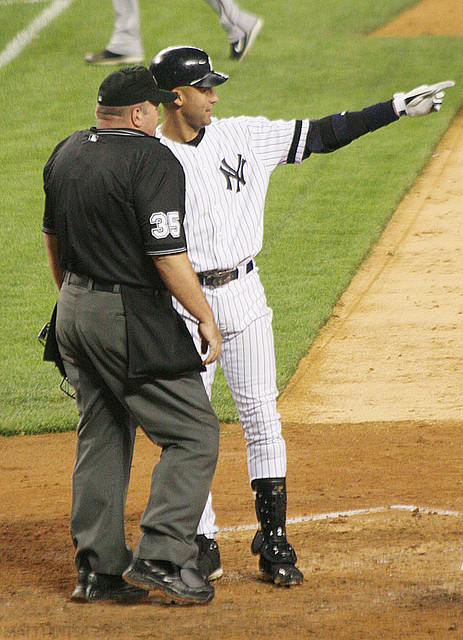
Ballgame criticismWe all like to give and receive positive feedback. But negative feedback? Now that is another issue. Most of us neither like giving nor receiving it. And for us to improve and become the best we can be, we need to give and receive negative feedback.

Why is something so necessary to our well-being sometimes so difficult?

For one thing, if you are insecure in who you are and have low self-esteem, you are less likely to give negative feedback to others because of your need to be liked. Parents fail to give negative feedback to their children because of the fear that their children will not like them. Co-workers and friends do the same.

Becoming a Resilient Leader – Part 2

Photo credit: James Jordan / Foter / CC BY-NDLast week in part one, I looked at three areas a leader should focus on in becoming a resilient leader: what is your passion, what are you good at, and self-acceptance.

This week I want to highlight four more areas. As noted last week, these suggestions are by no means exhaustive.

Know your values. Resilient leaders know their values. Values are derived from your beliefs and convictions. You must decide what is most important in your life. Is it family, maintaining your integrity, helping others, making a difference or honoring God with all that you are?

How to Become a Resilient Leader – Part 1

Resilient treeLeadership can be a very lonely job. Often people rise to the role of leadership and find themselves isolated and struggling with loneliness – and those around them don’t even realize it. This sense of isolation makes leaders vulnerable and sometimes less resilient.

Many good and talented leaders have lost their way and found themselves out of leadership because they were not resilient, so when the pressure came (which comes to all leaders), they were unable to survive. They ended up compromising their core values or were not strong enough to influence those they were leading to follow them.

In the next two weeks, I want to suggest some steps you can take in the pursuit of becoming a resilient leader. The following suggestions are by no means exhaustive.

Don’t Neglect the Temple of God – Your Body!

Sleeping with catWe all need reminders from time to time. Today’s blog is one of those reminders in an area in which we are prone to become careless and often forget to do the right thing.

Always tired, heartburn, falls asleep easily, overweight, constant aches and pains, lack of concentration, have trouble reading, short tempered, easily angered, takes everything personally, etc. – you get the picture? These all could be as a result of self-neglect.

Leaders are notorious for self-neglect. Self-neglect has a major impact on our effectiveness as leaders. More importantly, you want to be a role model to those you lead as one who cares for yourself so you can give your best.

Here are some suggestions to help you take better care of yourself.

Choice – Don’t Give It Away

Choices stairs“Forces beyond your control can take away everything you possess except one thing, your freedom to choose how you will respond to the situation.” – Viktor E. Frankl

How do you respond when life treats you unfairly? What do you do when you are hurt by someone you love and trust? How do you respond when things are done to you by powers beyond your control? We all have stories of pain and disappointment. The question is how do you allow your story (or stories) of pain and disappointment to affect and shape your life?

Becoming a Wounded Healer: How to Move from Stumbling Block to Stepping Stone

Sumbling blocksWe all have been wounded. Last week I blogged on the topic, “From Stumbling Block to Stepping Stone.” We must face and deal with our wounds in order to be freed from the shame, embarrassment, and dysfunction of them. Only then is it possible to become wounded healers as we use our journey of healing to help others.

Today I want to focus on the process of facing our woundedness so we can experience the healing we need to become wounded healers.

Each of us is different in our emotional, mental and psychological make-up and those differences affect how we go about the healing process. Our wounds, even if similar, impact us in different ways.

Transforming Your Stumbling Blocks into Stepping Stones to Healing

stepping stonesMany years ago while in graduate school, I read the book The Wounded Healer, by Henri Nouwen. That book forever changed my life as I was learning to deal with the wounds of my life. I recently read a quote from that book, which reminded me once again of the importance of recognizing that we all have wounds that continue to shape our lives. Here is the quote:

Nobody escapes being wounded. We all are wounded people, whether physically, emotionally, mentally, or spiritually. The main question is not “How can we hide our wounds?” so we don’t have to be embarrassed, but “How can we put our woundedness in the service of others?” When our wounds cease to be a source of shame, and become a source of healing, we have become wounded healers.

Leaders and Relational Challenges

dualityAs a leader, one thing is certain: you will face relational challenges. At times these challenges are easily resolved; other times they are time- and energy-consuming.

The easily resolved challenges generally are those that arise from simple misunderstandings. Recently I discovered that someone assumed I was upset with them because someone had spoken to me about them. After they spoke with me of their perception, I had the opportunity to explain that it was a misunderstanding. They then were able to put it behind them and move on.

Not all relational challenges are so easily resolved, however. More difficult relationship challenges arise when someone – or sometimes more than one person – decides to make your role as leader difficult. They may make accusations that are wrong and hurtful with total disregard for how it is affecting you, the organization, colleagues and, in the case of a Christian organization, the name of Jesus Christ. How should you as leader handle such challenges?