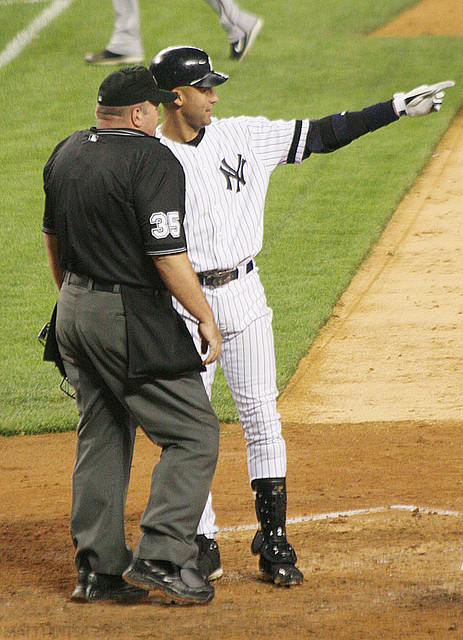
The Job That No One Wants

Ballgame criticismWe all like to give and receive positive feedback. But negative feedback? Now that is another issue. Most of us neither like giving nor receiving it. And for us to improve and become the best we can be, we need to give and receive negative feedback.

Why is something so necessary to our well-being sometimes so difficult?

For one thing, if you are insecure in who you are and have low self-esteem, you are less likely to give negative feedback to others because of your need to be liked. Parents fail to give negative feedback to their children because of the fear that their children will not like them. Co-workers and friends do the same.


Becoming a Resilient Leader – Part 2

Photo credit: James Jordan / Foter / CC BY-NDLast week in part one, I looked at three areas a leader should focus on in becoming a resilient leader: what is your passion, what are you good at, and self-acceptance.

This week I want to highlight four more areas. As noted last week, these suggestions are by no means exhaustive.

Know your values. Resilient leaders know their values. Values are derived from your beliefs and convictions. You must decide what is most important in your life. Is it family, maintaining your integrity, helping others, making a difference or honoring God with all that you are?

How to Become a Resilient Leader – Part 1

Resilient treeLeadership can be a very lonely job. Often people rise to the role of leadership and find themselves isolated and struggling with loneliness – and those around them don’t even realize it. This sense of isolation makes leaders vulnerable and sometimes less resilient.

Many good and talented leaders have lost their way and found themselves out of leadership because they were not resilient, so when the pressure came (which comes to all leaders), they were unable to survive. They ended up compromising their core values or were not strong enough to influence those they were leading to follow them.

In the next two weeks, I want to suggest some steps you can take in the pursuit of becoming a resilient leader. The following suggestions are by no means exhaustive.

Your Emotions Need Tending Too

Emotional self-careLast week we talked about “physical self-care” and the importance of caring for the temple of God – your body. This week, I would like to focus your attention on your “emotional self-care.”

Emotions are a fundamental part of being human. Anger. Jealousy. Joy. Sadness. Grief. Contentment. Love. All of these help you respond and interact with life and living. They impact how you think and behave.

To understand and appreciate the importance of emotional self-care, you need to think about what life is like when you neglect your emotional health.

Emotional self-neglect will often result in you being held captive by your emotions.

Don’t Neglect the Temple of God – Your Body!

Sleeping with catWe all need reminders from time to time. Today’s blog is one of those reminders in an area in which we are prone to become careless and often forget to do the right thing.

Always tired, heartburn, falls asleep easily, overweight, constant aches and pains, lack of concentration, have trouble reading, short tempered, easily angered, takes everything personally, etc. – you get the picture? These all could be as a result of self-neglect.

Leaders are notorious for self-neglect. Self-neglect has a major impact on our effectiveness as leaders. More importantly, you want to be a role model to those you lead as one who cares for yourself so you can give your best.

Here are some suggestions to help you take better care of yourself.

Becoming a Wounded Healer: How to Move from Stumbling Block to Stepping Stone

Sumbling blocksWe all have been wounded. Last week I blogged on the topic, “From Stumbling Block to Stepping Stone.” We must face and deal with our wounds in order to be freed from the shame, embarrassment, and dysfunction of them. Only then is it possible to become wounded healers as we use our journey of healing to help others.

Today I want to focus on the process of facing our woundedness so we can experience the healing we need to become wounded healers.

Each of us is different in our emotional, mental and psychological make-up and those differences affect how we go about the healing process. Our wounds, even if similar, impact us in different ways.

Leaders and Relational Challenges

dualityAs a leader, one thing is certain: you will face relational challenges. At times these challenges are easily resolved; other times they are time- and energy-consuming.

The easily resolved challenges generally are those that arise from simple misunderstandings. Recently I discovered that someone assumed I was upset with them because someone had spoken to me about them. After they spoke with me of their perception, I had the opportunity to explain that it was a misunderstanding. They then were able to put it behind them and move on.

Not all relational challenges are so easily resolved, however. More difficult relationship challenges arise when someone – or sometimes more than one person – decides to make your role as leader difficult. They may make accusations that are wrong and hurtful with total disregard for how it is affecting you, the organization, colleagues and, in the case of a Christian organization, the name of Jesus Christ. How should you as leader handle such challenges?

Going from Good to Great

Climbing mtnsWhat makes some leaders stand out as great, while others are seen as average? Why do some leaders succeed wherever they are, while some leaders struggle?

You may be familiar with the saying, “Leaders are born not made.” While the saying remains debatable, most will agree that there are certain core qualities, whether natural or learned, that all successful and great leaders possess.

Develop Your Emotional Intelligence

Heart Connection (by Alisa Looney)

Heart Connection (by Alisa Looney)

In my work with leaders during the past year, I have come to realize that one of the areas most leaders are continually challenged by is emotional intelligence. Therefore, I thought we should revisit the topic I blogged about just over a year ago.

Imagine the head of an organization who is sharp, intelligent and articulate, but most people can’t seem to get along with her. She does not connect well with people, but she does not see it as her lack of ability – she thinks that others do not “get” her.

Daniel Goleman, in his groundbreaking work Emotional Intelligence, has raised awareness of the importance of leaders having emotional intelligence if they are to be successful.

I believe emotional intelligence is crucial for the success of any leader. In many cases, emotional intelligence becomes the key factor in how well you guide and care for the people under your leadership.

Coleman identified five areas you must attend to in order to develop emotional intelligence.

Where are You Centered?

Dart boardAs a leader are you aware that your style of leadership and the direction in which you lead your people is a direct reflection of where you are centered or focused?

When you are asked to lead one thing is clear: you lead from where you are centered.

Usually a leader is centered on one of three areas:

  • Self
    • God
      • Activity

Where you are centered will determine your leadership style, influence, accomplishments and legacy.