Choice – Don’t Give It Away

Choices stairs“Forces beyond your control can take away everything you possess except one thing, your freedom to choose how you will respond to the situation.” – Viktor E. Frankl

How do you respond when life treats you unfairly? What do you do when you are hurt by someone you love and trust? How do you respond when things are done to you by powers beyond your control? We all have stories of pain and disappointment. The question is how do you allow your story (or stories) of pain and disappointment to affect and shape your life?


Becoming a Wounded Healer: How to Move from Stumbling Block to Stepping Stone

Sumbling blocksWe all have been wounded. Last week I blogged on the topic, “From Stumbling Block to Stepping Stone.” We must face and deal with our wounds in order to be freed from the shame, embarrassment, and dysfunction of them. Only then is it possible to become wounded healers as we use our journey of healing to help others.

Today I want to focus on the process of facing our woundedness so we can experience the healing we need to become wounded healers.

Each of us is different in our emotional, mental and psychological make-up and those differences affect how we go about the healing process. Our wounds, even if similar, impact us in different ways.

Transforming Your Stumbling Blocks into Stepping Stones to Healing

stepping stonesMany years ago while in graduate school, I read the book The Wounded Healer, by Henri Nouwen. That book forever changed my life as I was learning to deal with the wounds of my life. I recently read a quote from that book, which reminded me once again of the importance of recognizing that we all have wounds that continue to shape our lives. Here is the quote:

Nobody escapes being wounded. We all are wounded people, whether physically, emotionally, mentally, or spiritually. The main question is not “How can we hide our wounds?” so we don’t have to be embarrassed, but “How can we put our woundedness in the service of others?” When our wounds cease to be a source of shame, and become a source of healing, we have become wounded healers.

Leaders and Relational Challenges

dualityAs a leader, one thing is certain: you will face relational challenges. At times these challenges are easily resolved; other times they are time- and energy-consuming.

The easily resolved challenges generally are those that arise from simple misunderstandings. Recently I discovered that someone assumed I was upset with them because someone had spoken to me about them. After they spoke with me of their perception, I had the opportunity to explain that it was a misunderstanding. They then were able to put it behind them and move on.

Not all relational challenges are so easily resolved, however. More difficult relationship challenges arise when someone – or sometimes more than one person – decides to make your role as leader difficult. They may make accusations that are wrong and hurtful with total disregard for how it is affecting you, the organization, colleagues and, in the case of a Christian organization, the name of Jesus Christ. How should you as leader handle such challenges?

Going from Good to Great

Climbing mtnsWhat makes some leaders stand out as great, while others are seen as average? Why do some leaders succeed wherever they are, while some leaders struggle?

You may be familiar with the saying, “Leaders are born not made.” While the saying remains debatable, most will agree that there are certain core qualities, whether natural or learned, that all successful and great leaders possess.

The Leader’s Most Powerful Tool

Photo credit: Pierre Metivier / Foter / CC BY-NCLast week I talked about how our use of words impact and shape all our relationships. This week I want to focus more specifically on the leaders and the power of their words.

As a leader, your use of words is by far the most influential tool you have for guiding and molding those you lead. Your words define the culture of the organization. The question is not whether your organization has a culture, but what kind of culture you have created?

Let us look at some ways in which your words help create the culture of your organization.

Let Your Words Give Life

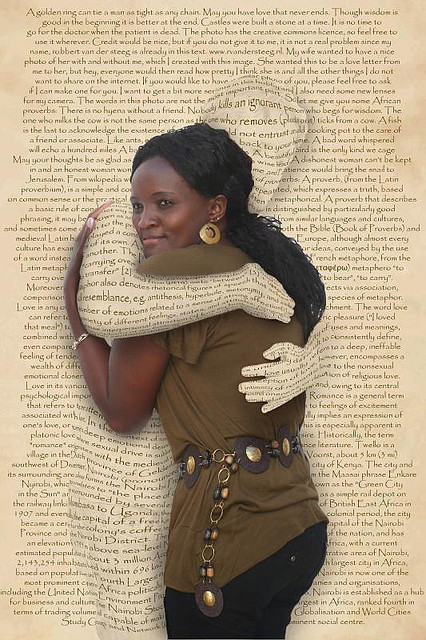
Words embraceI grew up hearing the saying, “Sticks and stones may break my bones but words could never hurt me.” As I grew to adulthood and became honest with my pain in life, I had to admit that words do hurt. Words can hurt so deeply that recovery time is often much longer than the time needed for a broken bone to heal. For some of us, healing has taken most of our lives while others struggle to embrace the healing because they have been hurt so deeply.

On the other hand, words can build us up to believe in ourselves. We grow to be confident, hopeful and caring because of words spoken to us. Such words may continue to inspire us long after they are spoken. Think about the words you heard while growing up that inspired you to be the person you are today. The people who spoke those words are easy to recall.

Develop Your Emotional Intelligence

Heart Connection (by Alisa Looney)

Heart Connection (by Alisa Looney)

In my work with leaders during the past year, I have come to realize that one of the areas most leaders are continually challenged by is emotional intelligence. Therefore, I thought we should revisit the topic I blogged about just over a year ago.

Imagine the head of an organization who is sharp, intelligent and articulate, but most people can’t seem to get along with her. She does not connect well with people, but she does not see it as her lack of ability – she thinks that others do not “get” her.

Daniel Goleman, in his groundbreaking work Emotional Intelligence, has raised awareness of the importance of leaders having emotional intelligence if they are to be successful.

I believe emotional intelligence is crucial for the success of any leader. In many cases, emotional intelligence becomes the key factor in how well you guide and care for the people under your leadership.

Coleman identified five areas you must attend to in order to develop emotional intelligence.

Avoiding the Easy Road of Making Assumptions

Argument 1Has anyone ever kept you waiting for an appointment? Have you ever experienced someone cutting in front of you in traffic or at the grocery store?

What went through your mind when these things happened? If you are like many people, you reacted with anger or frustration because the person appeared to disrespect you in some way.

What would be your reaction if you found out that the person was late because they were involved an accident that injured a child? Or what if you knew that the person who cut in front of you had just received news from their doctor that they had terminal cancer?

Again, if you are like most people, you likely would have feelings of guilt for being angry or frustrated at them, and you would have greater understanding of their behavior. The reason for your change of feelings and perspective is because, in the first instance you assumed the person was being disrespectful; but when you knew the truth, you had a change of heart.

Where are You Centered?

Dart boardAs a leader are you aware that your style of leadership and the direction in which you lead your people is a direct reflection of where you are centered or focused?

When you are asked to lead one thing is clear: you lead from where you are centered.

Usually a leader is centered on one of three areas:

  • Self
    • God
      • Activity

Where you are centered will determine your leadership style, influence, accomplishments and legacy.