How to Judge the Reliability of Online Information

The internet has made it easier than ever to find news, research, advice, and public data. It has also made it easier for inaccurate claims to spread quickly. A polished article is not necessarily a reliable one, and a large number of shares does not prove that information is correct. Evaluating online material requires a few deliberate checks that can be applied across many subjects.

Start with the source

Before examining a claim, identify who published it and why. Government agencies, universities, professional associations, established news organizations, and recognized research institutions often provide information under editorial or legal standards. That does not make every statement infallible, but it creates a useful basis for evaluation.

Look for an identifiable author, publication date, organizational contact information, and an explanation of the source’s purpose. Anonymous material may still contain accurate information, yet the absence of accountability makes its claims harder to assess. Commercial interests should also be considered. A page selling a product may present selected evidence while giving less attention to limitations or competing findings.

Check the evidence behind the claim

Reliable writing distinguishes between evidence and opinion. Stronger sources refer to primary documents, published studies, official statistics, or direct records. Readers should follow those references when possible rather than relying only on summaries. A citation is useful only if it actually supports the statement being made.

Numbers deserve particular attention. Ask what was measured, how the sample was selected, and whether the figure describes a proportion, an absolute number, or a change over time. A percentage increase can sound dramatic when the underlying numbers are small. Likewise, a survey result may not represent the wider population if its participants were selected in a narrow or self-selected way.

Compare independent sources

One of the most effective checks is comparison. Search for coverage from organizations that do not appear to share the same commercial, political, or institutional interests. Agreement among several independent sources provides more confidence than repeated wording across sites that all rely on the same original report.

When sources disagree, examine the reasons rather than simply choosing the most convenient conclusion. Differences may arise from publication dates, definitions, data sets, or standards of proof. A responsible account should acknowledge meaningful uncertainty instead of presenting a complex issue as settled without qualification.

Pay attention to digital presentation

Web design can influence how trustworthy a page feels, but appearance is not evidence. Professional graphics, confident headlines, and familiar branding may create an impression of authority without demonstrating accuracy. Clear navigation and descriptive links are helpful because they allow readers to understand where a reference leads. Even a simple placeholder, test, shows why link text should communicate purpose rather than leaving the reader to guess.

Be cautious with emotionally charged headlines, urgent requests to share, and claims that discourage scrutiny. False information often relies on speed and outrage. Pausing to inspect the wording, source, and supporting material can reduce the chance of accepting a misleading claim.

Use a practical verification routine

A short routine can make checking information manageable. First, identify the central claim. Next, locate the original source or data. Then compare the claim with at least two independent accounts and check whether important context has been omitted. Finally, record the publication date, because accurate information can become outdated when conditions change.

No single test can guarantee perfect accuracy. Careful evaluation is instead a process of weighing evidence, recognizing uncertainty, and remaining willing to revise a judgment. These habits help readers navigate online information with greater independence and avoid treating confidence, popularity, or visual polish as substitutes for proof.


A Reflection on an Amazing Journey

On June 13, 2014, I posted my first blog in obedience to what I felt God was calling me to do. It had to be God because this is not something that I was able to do in my own strength – nor did I particularly want to write a blog! This is especially true in my case; I am dyslexic, and I never attended high school. I did not go to school from the ages 11-21. Writing was a nearly impossible challenge for me. However, in obedience I took on the challenge and for six years and three months, posted a weekly blog up until the end of 2018. In January 2019, I began an assignment as a missionary in South Africa with the Church of the Nazarene, so I posted every other week.

God used many people to enable me to continue this blog over the years. I will be remiss if I do not acknowledge some of the main supporters.

How to Engage with Difficult People

We have all encountered someone who we have a difficult time getting along with. Reasons vary for why we struggle to get along with some people while we seem to have no problem with others.

With some, it is the short fuse or seemly uncontrollable anger. Others might have mood swings so you can never tell at any given interaction what mood the person’s in. Others are overly sarcastic. Then there are those who are never wrong and nothing is ever their fault; they are masters of blame-shifting.

Why Some People Find It Difficult to Trust Others

Why do you find it so difficult to trust others? Why do you find it amusing when a child is honest and trusting? You were once like that child, completely trusting and honest with those around you. What has transpired from childhood to adulthood that now makes trusting others so difficult?

I have spoken with many people who have said they know they need to start trusting others, but they don’t know if they can. When I ask why, the typical answer is usually, “I am afraid others would judge me or not like me if they get to know the real me.” There is also the fear of letting others know that they are struggling.

Why do we find it difficult to trust others with who we are?

Leading Change Requires Building Trust

Developing trust takes time, effort and intentionality. You have to be conscious of the fact that you are working on building trust with the people you are leading. Do not expect to be trusted simply because of your title, power, authority, or job description. Trust is something you must earn from the people you lead.

Emotional Intelligence is Key to Achieving Life’s Goals

With all the knowledge, skills, talents, and drive you may have, if you are not emotionally self-aware, you will not succeed at your life’s goals. You do not have to look far to find someone who has failed in this regard because they did not take the time to know who they were emotionally, how to control their emotions, and what motivated their emotions. You yourself may have experienced consequences due to lack of awareness of emotional strengths and weaknesses; perhaps you failed because you thought you were strong in an area where you were actually weak.

Changing Strategies and Methods without Losing the Mission

The Challenge of Every Leader

In the world of organizational performance, the church stands apart in a significant way from all other organizations. At the same time, the church continues to incorporate organizational skills used by secular organizations, many of which have assisted the church in doing great things to spread the Gospel.

Many larger churches have taken on the management structure of corporations with the lead pastor and numerous supporting staff mirroring corporate CEOs and managers or vice presidents. Organizational structures which help churches operate effectively reflect good stewardship of resources.

Wounded Healer or Victim?

As human beings we have many things in common, one of them is that all of us have been wounded by someone. For some the wound or wounds have been deep, disorienting, painful and catastrophic. I know there are the few who have never been able to overcome the wounds in order to take responsibility for their lives and have had to be taken care of for the remainder of their lives. People like this are the exception. For most of us, we must decide how we will go on with life having been wounded.

Thinking Always Comes Before Doing

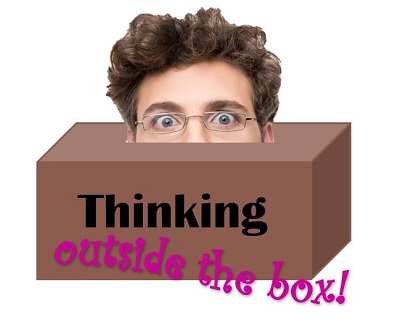
As leaders in this COVID-19 new normal, we will have to learn how to function outside the box of our normal way of doing things or our comfort zone if we are going to be effective going forward. But before we can function outside our comfort zone, we first must learn how to think outside our comfort zone.

When things are new and different and we must learn how to function in them, we tend to get nervous, anxious, afraid and sometimes plain angry. Sometimes, the new way of functioning is not as difficult compared to the mental shift we have to make in order for us to start functioning in it. It gets even more difficult when you had no say in the new normal and you have to go along with it anyway.